Marine Circular Innovation Promotes Blue Economy Independence in Patuguran Village through Marine Product Diversification and Marine Tourism
Pasuruan — Efforts to encourage the economic independence of coastal communities continue to be made through the development of marine resource potential that is value-added and sustainable. One of these efforts is realized through a Community Service (PkM) activity themed “Marine Circular Innovation: Optimization of Marine Product Diversification Through E-Minsa (E-Mina Sentosa), Blue Expo (Tourism Package Creation), and Patuguran Exploration Towards the Independence of the Blue Economy in Patuguran Village.”
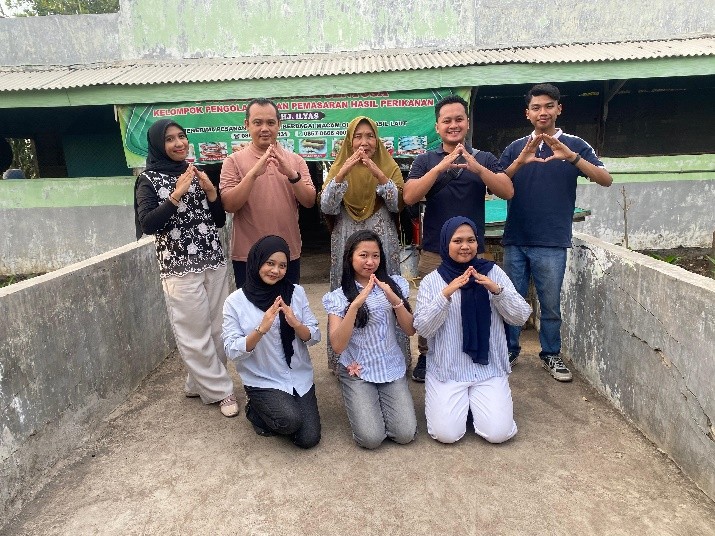
This activity was carried out by a team of lecturers and students consisting of Alif Faruqi Febri Yanto as the head, Dudung Ma’ruf Nuris and Lulu Nurul Istanti as lecturer members, and Fifi Maulida and Bilqis Rizqia as student members. This program collaborated with two community groups in Patuguran Village, namely Poklahsar Mina Sentosa, which has 12 members, and Pokdarwis JWMP of Patuguran Village, which has 20 members.
The Marine Circular Innovation Program is designed to optimize the marine economic potential of Patuguran Village through the integration of marine product processing, product diversification, marketing digitalization, and the development of tourism based on local potential. This approach is expected to transform marine resource potential that has not yet been fully optimized into a sustainable source of income for the community.
One of the main forms of intervention in this activity is the procurement of a fish grinder for Poklahsar Mina Sentosa. The procurement of this equipment is intended to increase the capacity and efficiency of the marine product processing production process. With the fish grinder, the processing of raw materials can be done more quickly, consistently, and able to adapt to consumer order requirements.
The support for the production equipment has an impact on increasing the business capacity of the partners. During the implementation of the program, the Mina Sentosa processed fish production was able to support an increase in demand of up to 1,500 orders. This achievement demonstrates that the strengthening of production facilities is not only oriented toward increasing the volume of products, but also opens up opportunities for community groups to expand their markets and boost marine-based economic activity.
In addition to strengthening the marine product processing sector, the program also develops the E-Minsa (E-Mina Sentosa) concept as part of optimizing marketing and strengthening the identity of local products. The utilization of a digital approach is expected to help partners introduce processed marine products more widely, increase consumer reach, and build a marketing ecosystem that is more adaptive to technological developments.
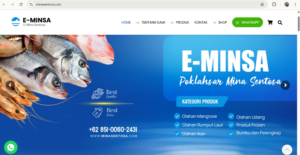
Figure 1. E-Minsa
Meanwhile, through the Blue Expo, the PkM team, together with the JWMP Tourism Awareness Group (Pokdarwis), developed the tourism potential of Patuguran Village by formulating tour packages based on local potential. The development of tour packages is an important part of the economic diversification strategy because the community not only gains economic value from marine products in the form of processed goods, but also from the tourism experiences offered to visitors.
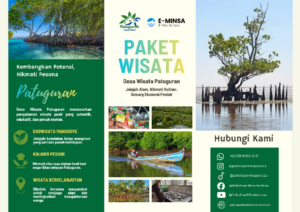
Figure 2. Blue Expo
The concept was then reinforced through Patuguran Exploration, an effort to explore and package the village's potential as a destination with economic, social, and environmental appeal. Community-based tourism development is expected to create linkages between the fisheries sector, MSMEs, culinary arts, tourism services, and other community economic activities.
The integration of marine product processing and tourism becomes the main character of Marine Circular Innovation. Marine resources are not only viewed as commodities sold in the form of raw materials, but are developed into value-added products, tourism experiences, and a local economic identity. This approach simultaneously encourages the community to utilize resources more efficiently while paying attention to coastal environmental sustainability.
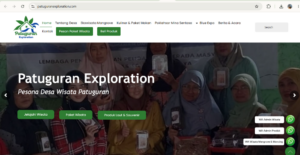
Figure 3. Patuguran Exploration
This activity directly supports the achievement of Sustainable Development Goal (SDG) 8: Decent Work and Economic Growth, particularly through strengthening the capacity of community businesses, increasing productivity, expanding market opportunities, and developing local economic activities. The increase in production capacity to up to 1,500 orders serves as one of the indicators that interventions in the productive sector can contribute to the economic growth of community groups.
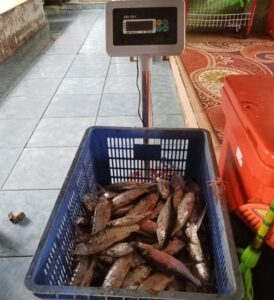
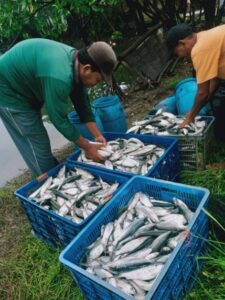
Figure 4. Production Process of Poklahsar Mina Sentosa
On the other hand, this program is also closely related to SDG 14: Responsible Consumption and Production (Responsible Consumption and Production)especially in the context of marine economy development (blue economy) which is oriented toward the productive yet sustainable utilization of marine resources. The development of processed marine products and coastal tourism is directed so that marine potential provides economic benefits for the community without neglecting the importance of maintaining ecosystem sustainability. Through collaboration among universities, fishery product processing groups, tourism awareness groups, and the community of Patuguran Village, Marine Circular Innovation is expected to serve as a development model for the coastal community's economy that integrates innovation, digitalization, product diversification, and tourism based on marine potential. Moving forward, this program is expected not to stop at increasing production capacity, but to evolve into a local economic ecosystem capable of creating new business opportunities, strengthening community group independence, enhancing the tourism appeal of Patuguran Village, and providing sustainable added value to marine resources. Thus, Marine Circular Innovation serves as a concrete step in realizing the self-reliance of the Patuguran Village Blue Economy while contributing to the achievement of SDGs 8 and SDGs 12.