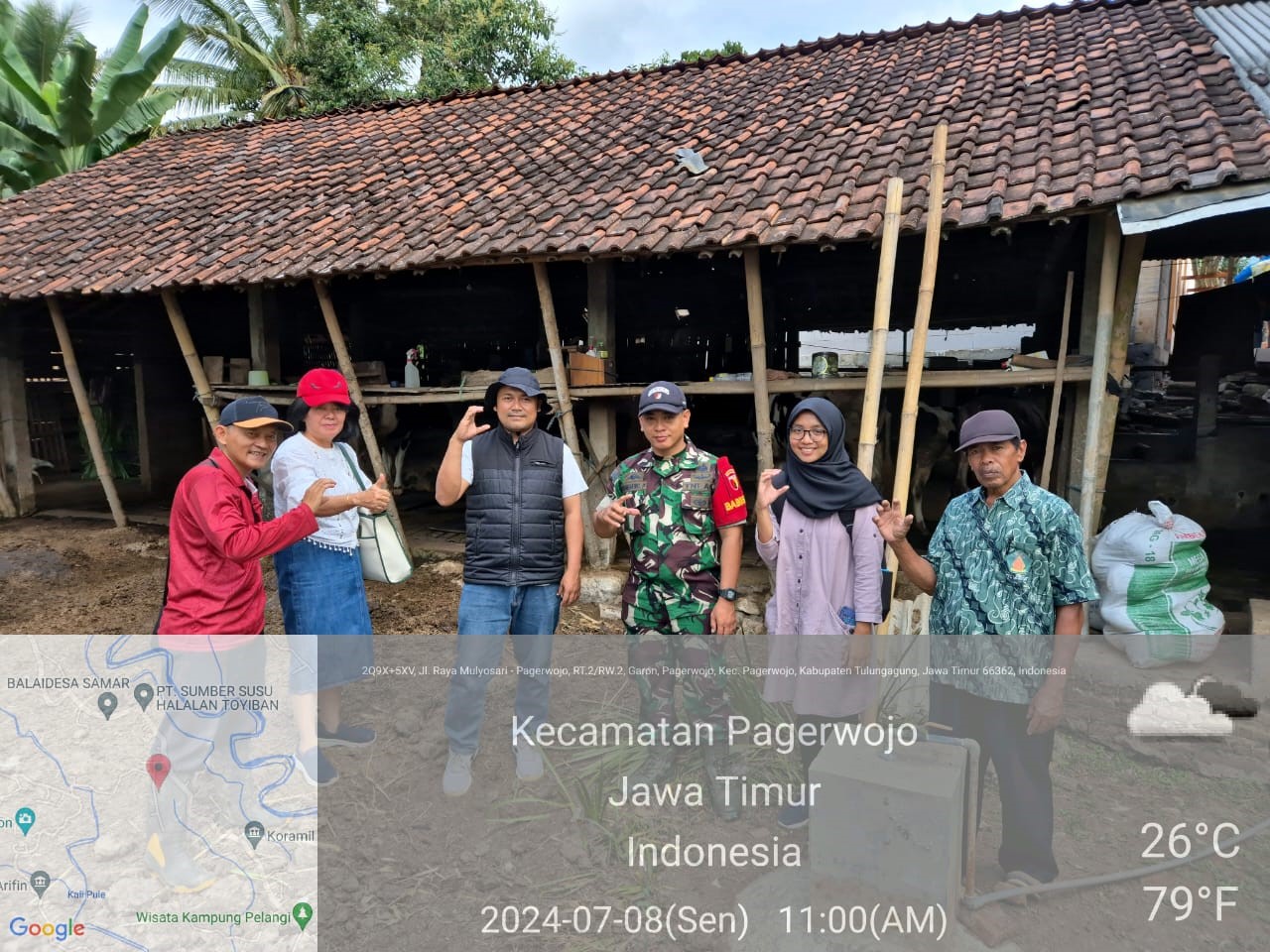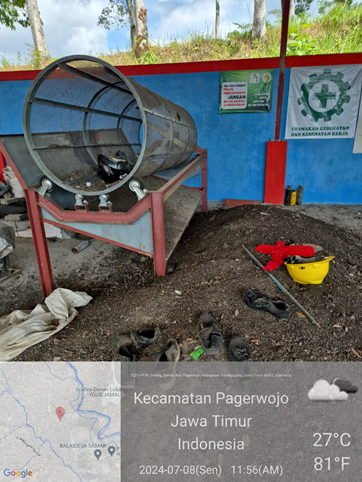
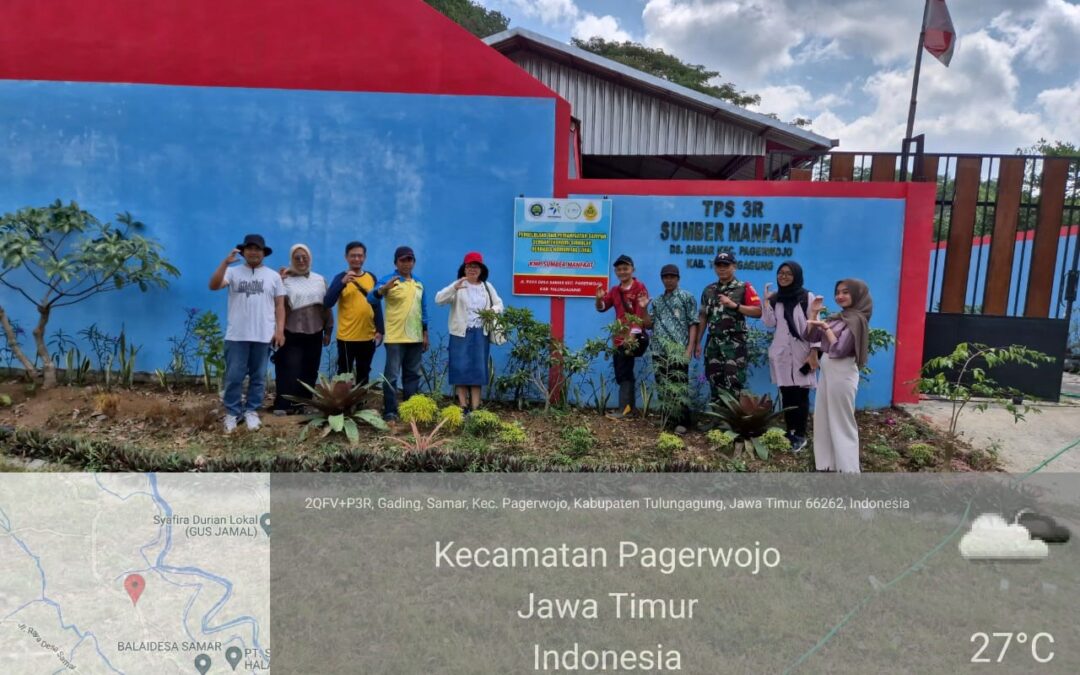
Field observation activities in the context of this research were carried out by Prof. Etty Soesilowati, MSi and Slamet Fauzan, SPd, MPd Lecturers of the Faculty of Economics and Business, State University of Malang together with lecturer Prof. Sucihatiningsih Dian W.P. from Semarang State University. The activity was carried out on July 8, 2024 in Samar Village, Tulungagung Regency, East Java.
Samar Village is located under the foot of Mount Wilis in Pagerwojo District, Tulungagung Regency, East Java Province with a population of approximately 4,383 people, most of whom work as farmers and breeders. The increasing population has an impact on the increasing need for animal protein derived from fish. The fish feed used is generally fishmeal, which is still imported and has limited availability so that prices fluctuate.
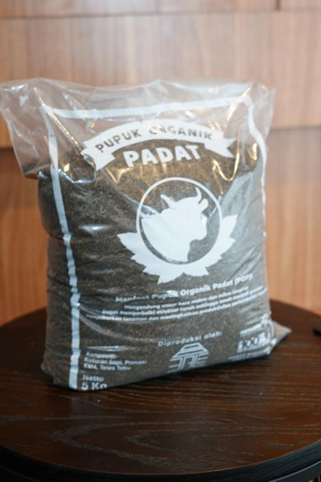
Samar Village developed an organic waste management system into organic fertilizer called "Bale Letong" and "Maggot". The activity was initiated by the Community organizer group "Sumber Manfaat" which has been active for approximately 1.5 years with the assistance of the UM Research Team.
Through composting 1,000 kg of livestock waste, the "Sumber Manfaat" group managed to produce 40 packages of "Bale Letong" organic fertilizer with a cost of production (COGS) of Rp16,188 per package. This product is then marketed at a selling price of IDR 35,000 per package. Based on the calculation of production costs and income, it shows that the "Bale Letong" organic fertilizer production business has promising profit potential, given the relatively small initial capital and the use of abundant local resources.
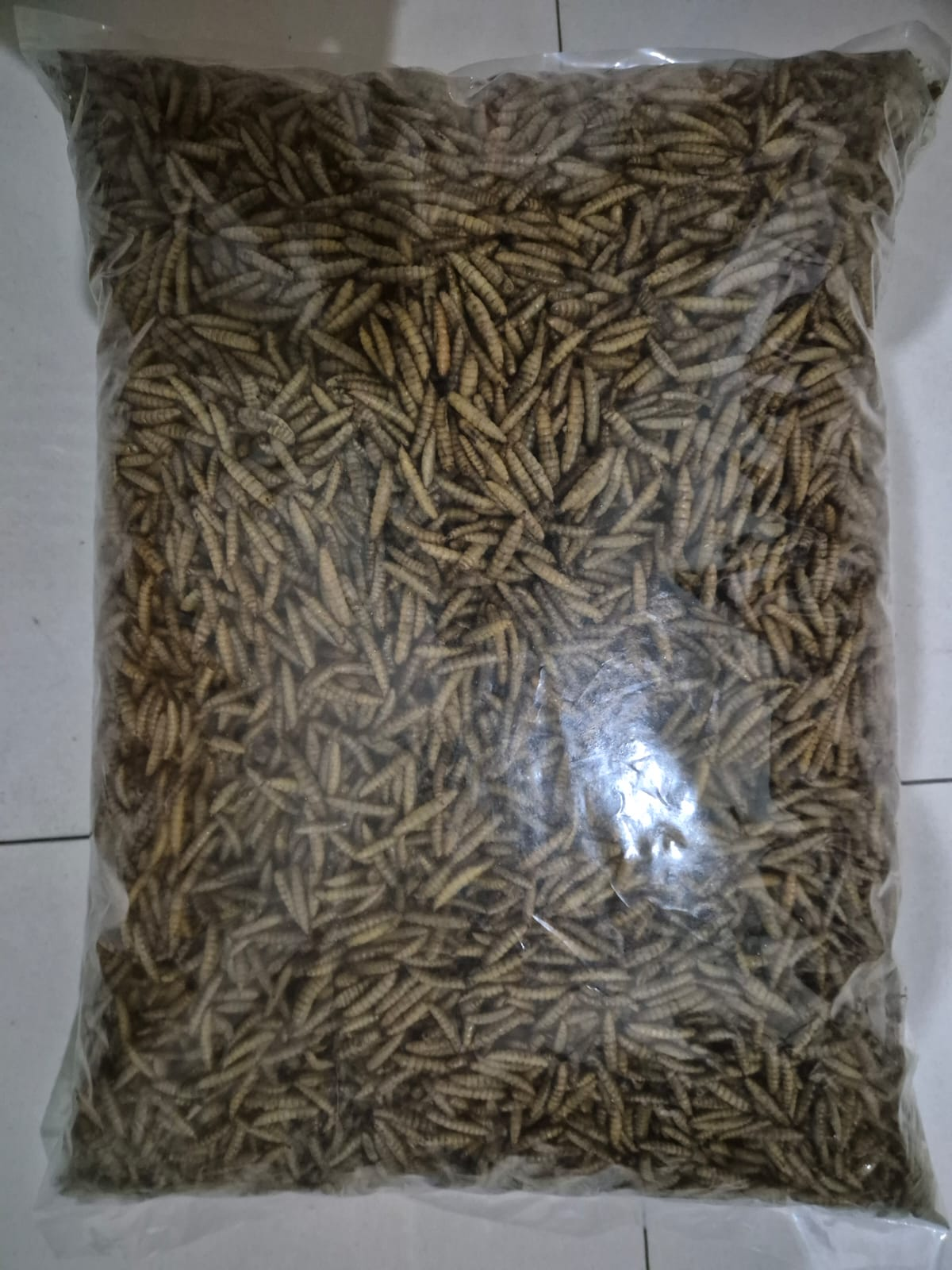
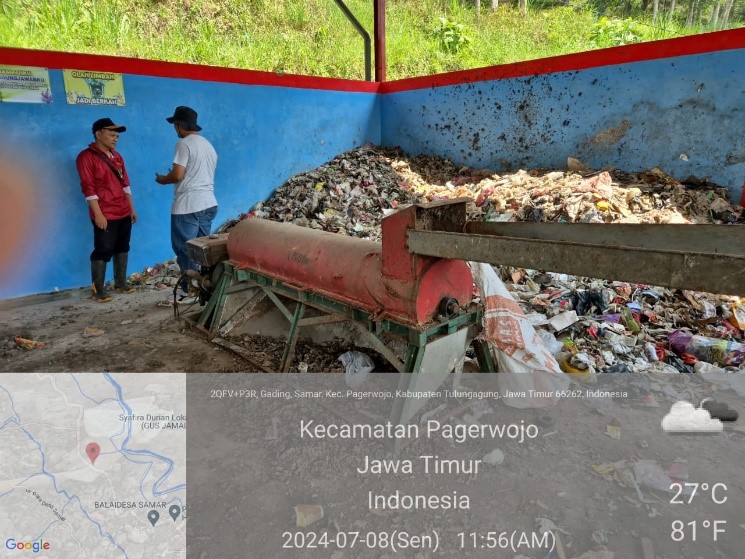
The "Sumber Manfaat" group, in addition to processing organic waste into fertilizer, was also initiated to develop animal feed through Maggot cultivation. The community organizer group "Sumber Manfaat" placed the maggot cultivation in the village's TPS 3R. The source of maggot feed which is organic waste is supplied from the surrounding community's waste. There are about 150 households registered as members who dispose of waste at TPS 3R. The total waste collected every month ranges from 2400 to 2500 kilograms. However, not all of the waste can be used as maggot feed, there are only about 30% waste or about 720 to 750 kilograms of organic waste that can be used as a source of maggot feed each month. The maximum maggot that can be produced at TPS 3R Sumber Manfaat is 40 kilograms per month. The harvest is distributed to farmers at a price of Rp10,000/kg.